Every worker is a decision
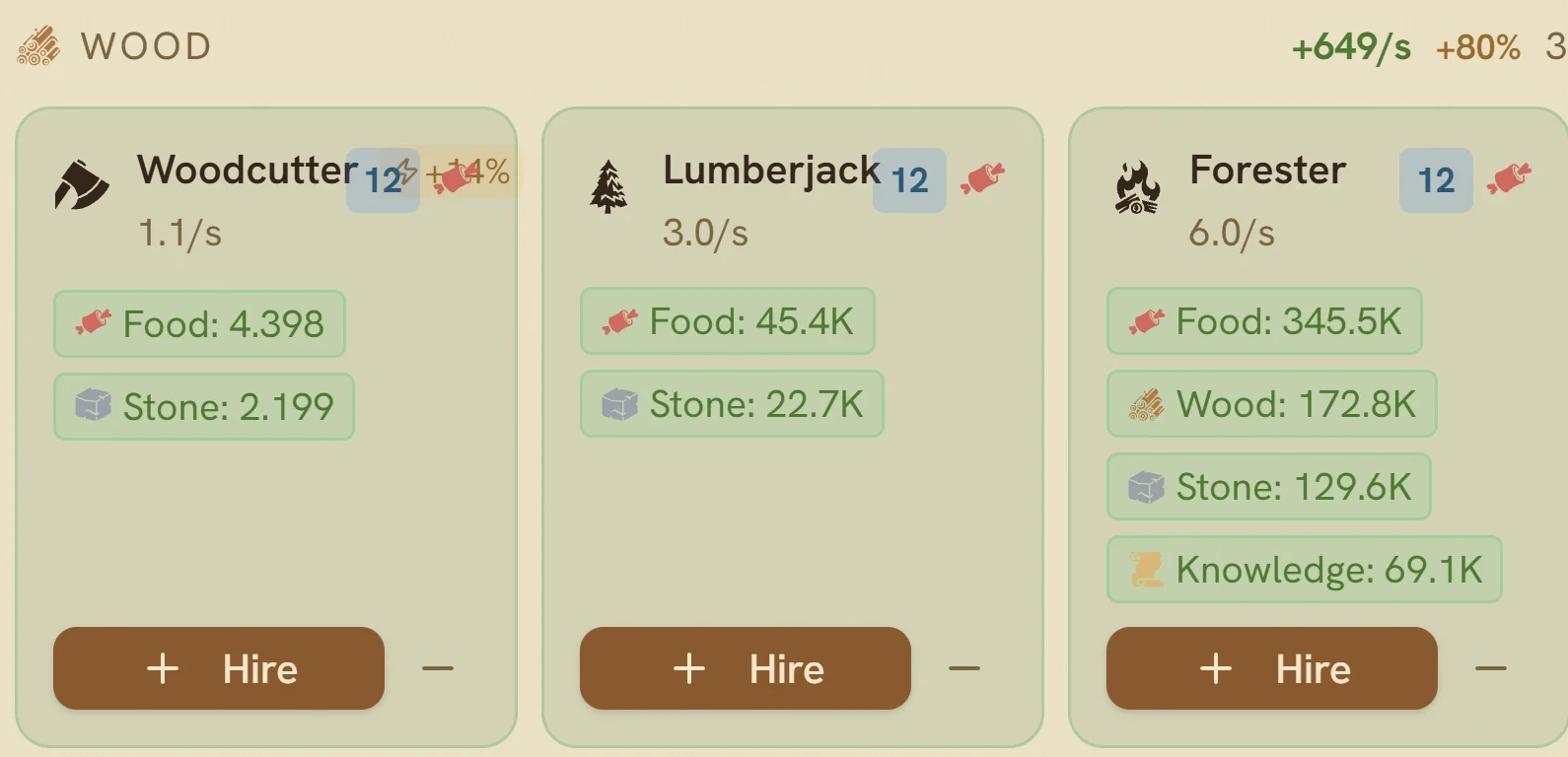
54 roles, each producing something specific and eating into a shared population. Hiring costs rise 35–50% per worker, so the tenth Builder costs many times the first.

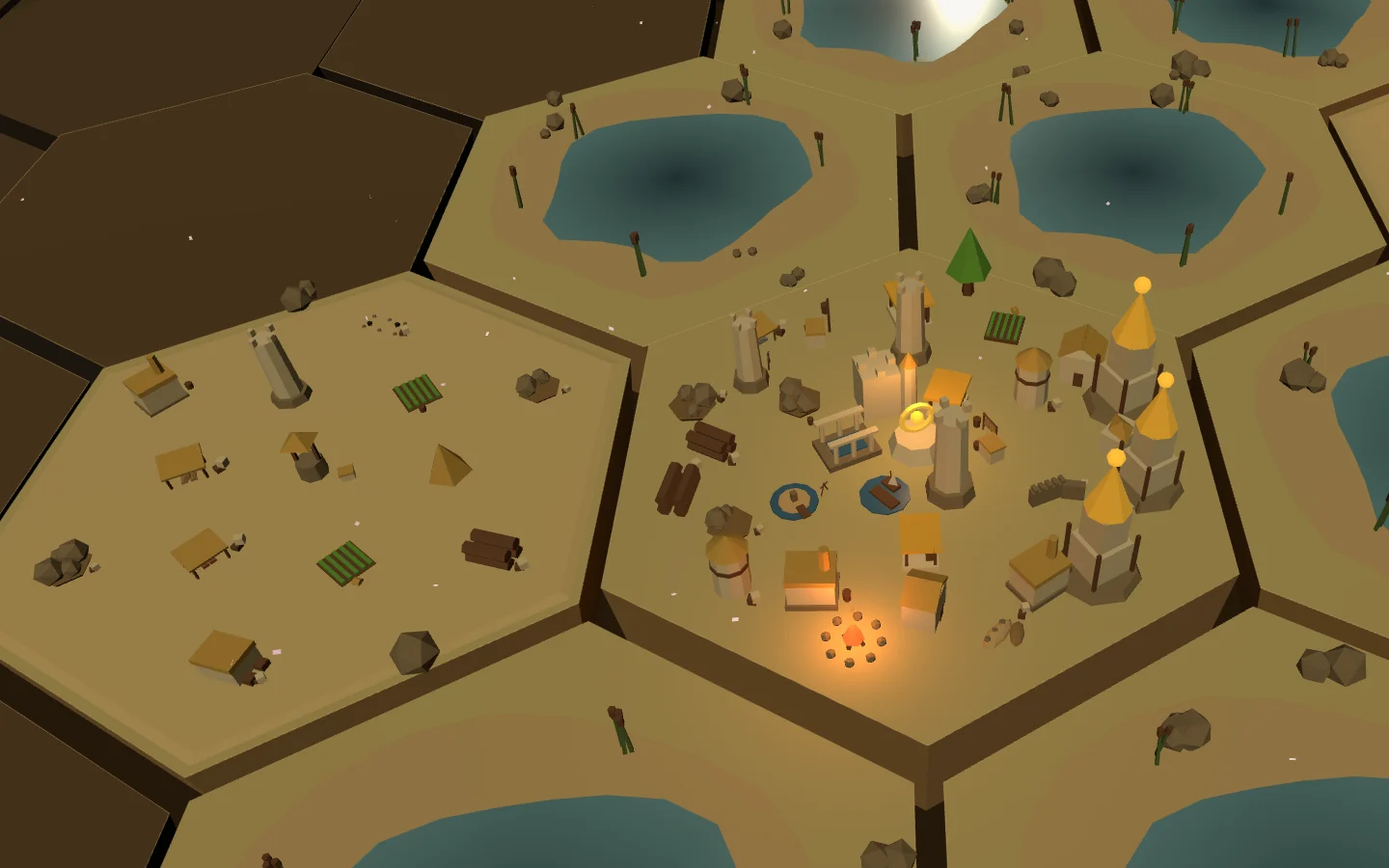
An idle civilization builder set in a single valley you can orbit, pan and zoom. Nine ages. Everything you raise, you can see. Everything you choose, you keep.
The first hour
You start with a gatherer, a woodcutter and a builder, and a food clock already counting down. Nobody explains the whole game to you — a ten-step tour covers the basics and then gets out of the way.
The first real decision arrives within minutes: another gatherer now, or a hut so that more people can live here at all? Every hire costs more than the last, so there is no order that is simply correct.
The arc
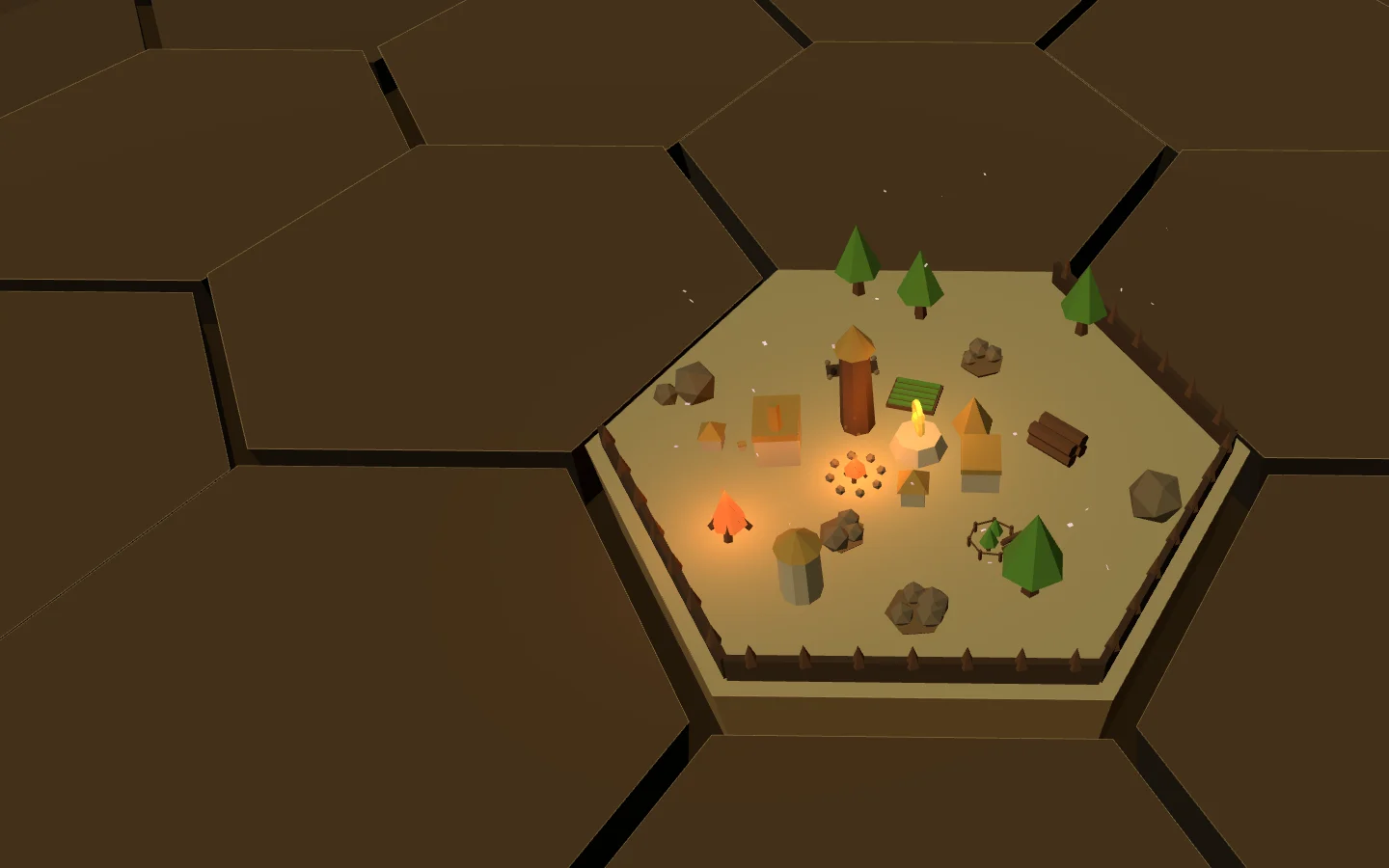
Each age is gated behind a single technology, and arriving changes the ground itself — the palette, the buildings, the threats, the colour of the sky.
A campfire, three workers, and everything still to learn.
OpeningFields, granaries, and the first written word.
AgricultureOre, coin, and the first standing army.
Bronze WorkingPhilosophy, theatre, libraries that outlive you.
PhilosophyWalls, cathedrals, roads — and monuments you must choose between.
FeudalismSteam, steel, and the first smoke that stays.
Steam PowerGrids, data, and cities that plan themselves.
ElectricityThe backdrop stops being a valley.
RocketrySomewhere out there, an ending you choose.
FTL TravelEvery image on this page is from the first five ages. What the last four look like is the reason to play.
Systems
There are no standalone tabs. Happiness feeds population; population staffs the mines; the mines feed the walls that stop the raid that would have cost you the harvest.
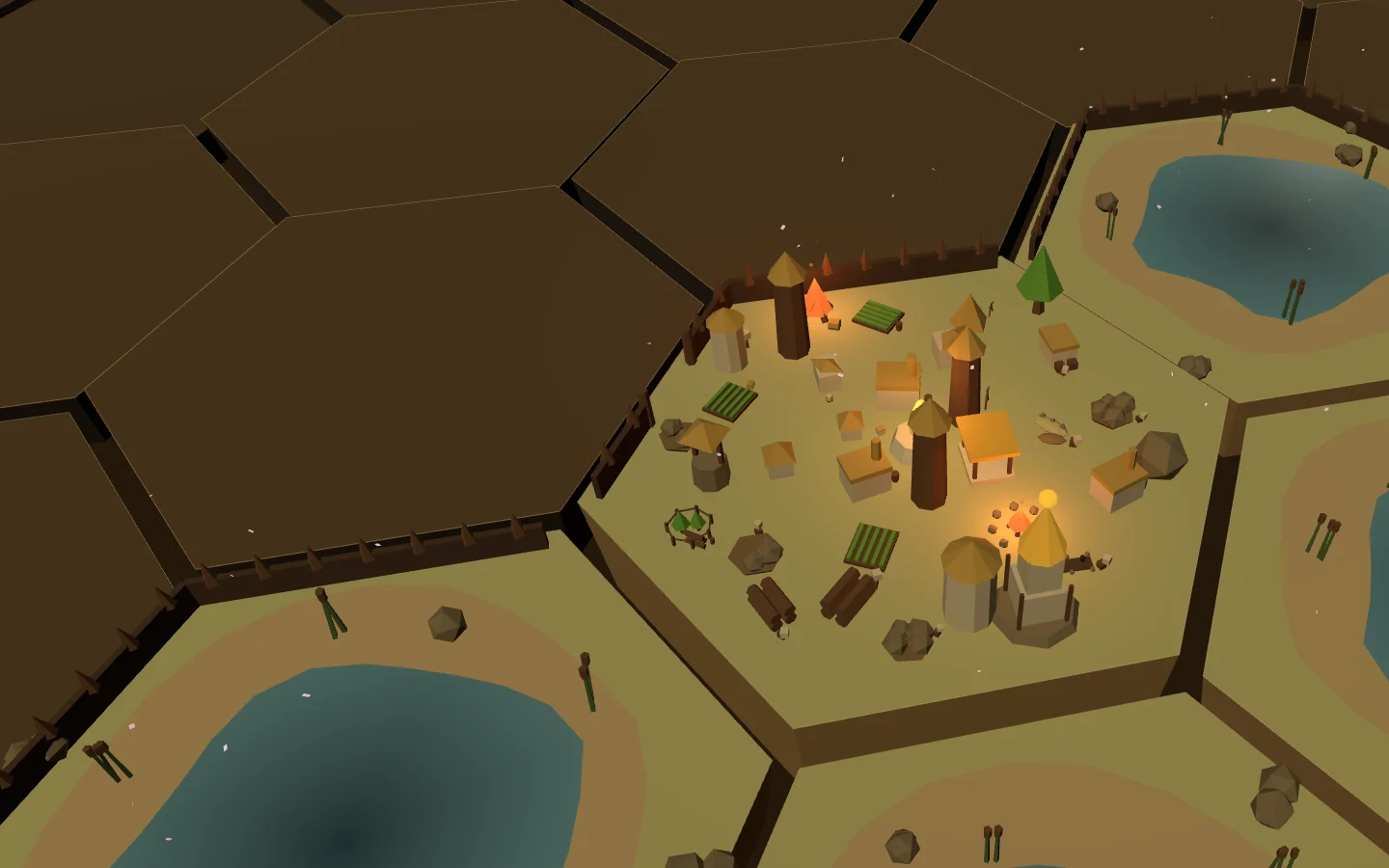
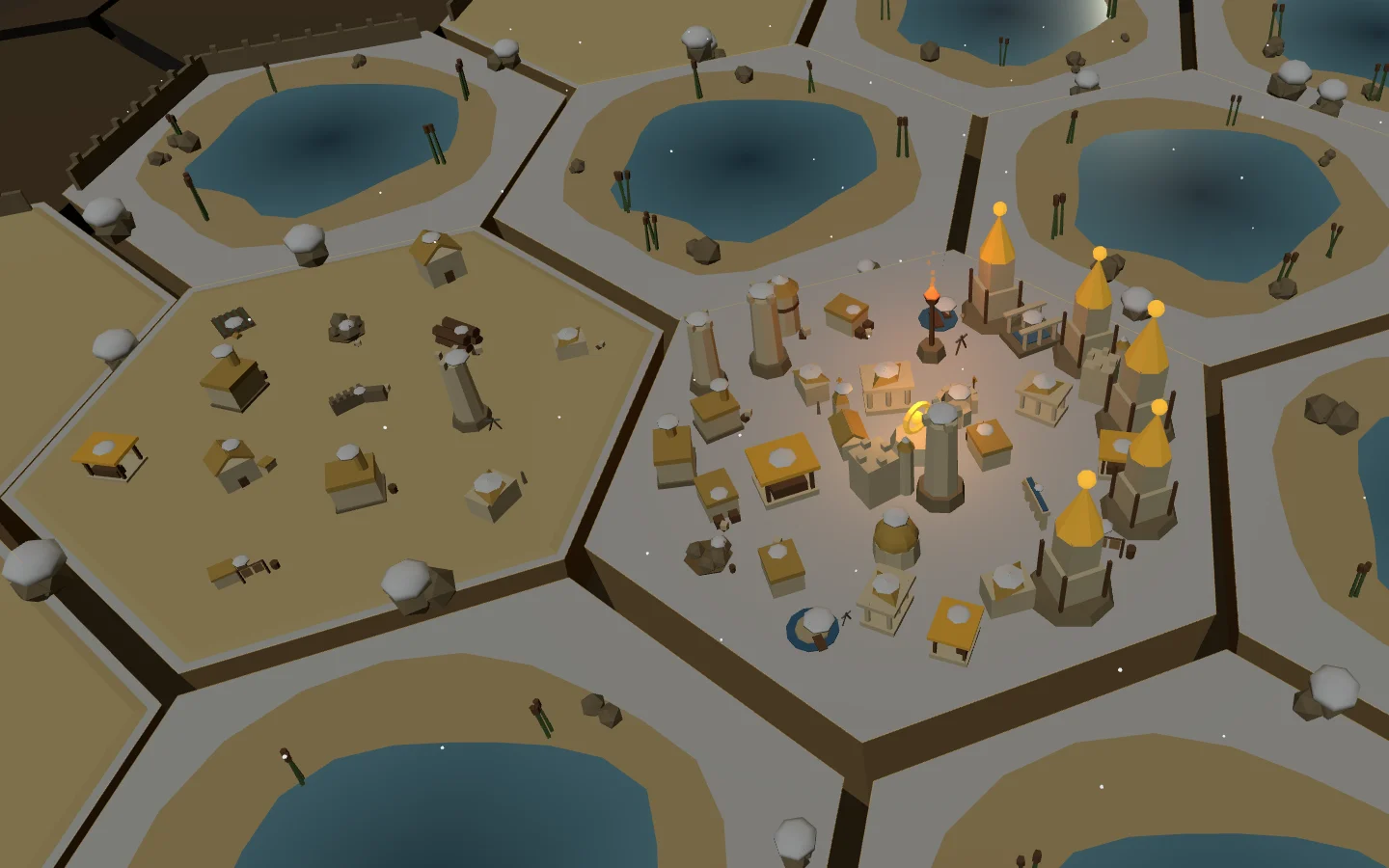
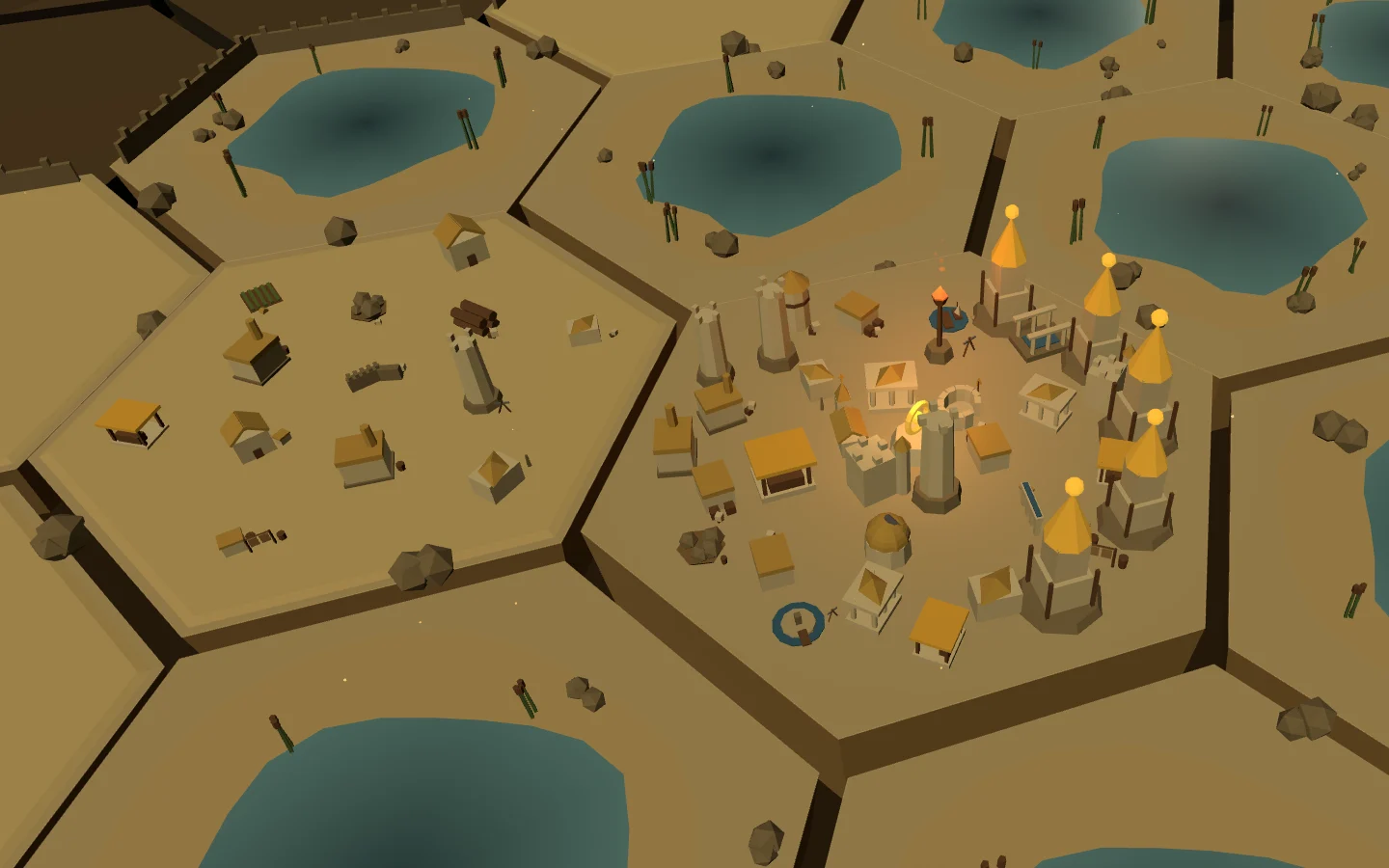
Your civilization is a hex of real ground rendered in 3D, built from your actual save. Raise a granary and a granary appears. Claim a border tile and the map grows into it. Let a disaster through and you can see what it broke.
Drag to orbit, scroll to zoom, click a tile to work it. The same scene is the backdrop of the title screen, drawn from whichever civilization you last played.
54 roles, each producing something specific and eating into a shared population. Hiring costs rise 35–50% per worker, so the tenth Builder costs many times the first.
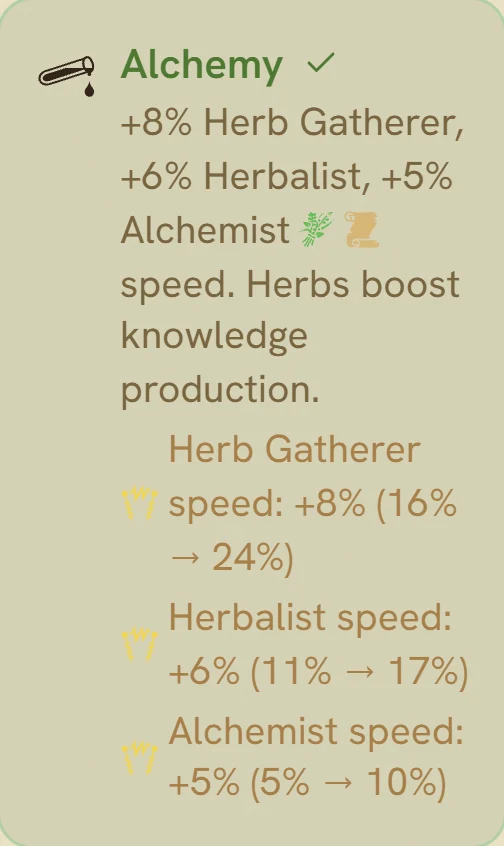
67 technologies, each unlocking real content rather than a flat multiplier — and each printing the exact before-and-after on every worker it touches, before you spend.
Housing raises your cap. Storage decides how much of a boom you get to keep. Industry multiplies one resource; culture buys back the happiness the industry cost you.
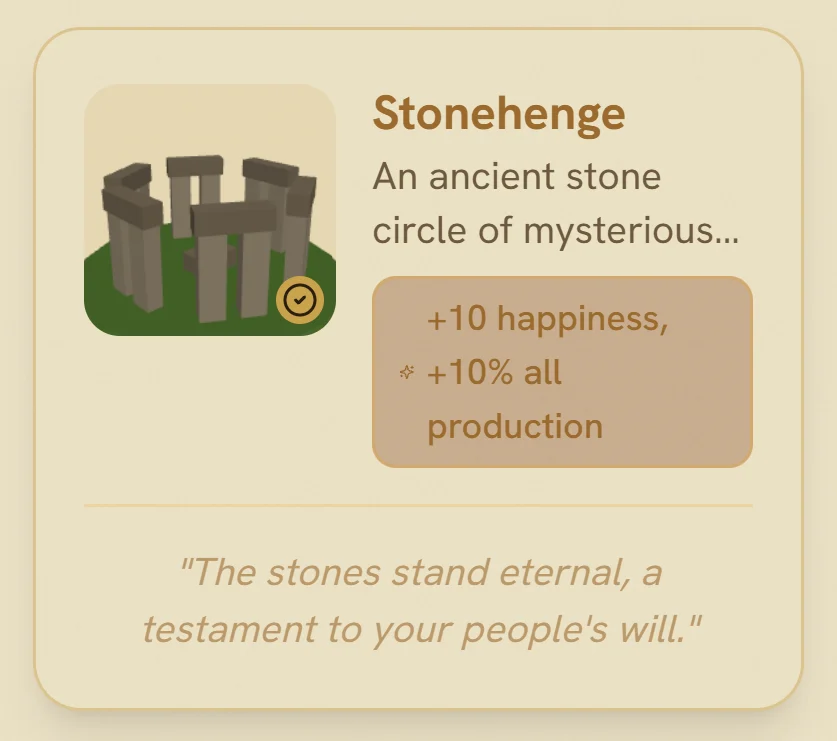
14 monuments, but only two per age. The Medieval Age offers five and lets you raise two. What stands in your valley is a statement about what you cared about.
No separate strategic layer. Frontier tiles ring your hex and you take them off the ground itself — with soldiers, with silver, or with faith. Land you hold produces for you forever after.
Solaris grows enormous, joyful populations — and fights at 80% strength. The other two ask for something else. Faith buys blessings from a three-tier tree, and the choice is permanent for that civilization.
15 routes running in parallel, as many at once as your posts, guilds and exchanges allow. Prices drift as you flood the market, so the profitable route this hour is not the profitable route next hour.
18 unit types across the ages, a counter system, and raids that arrive whether or not you built for them. Soldiers consume population, so an army is a standing cost, not a stat.
Nine natural disasters, building damage, raids and pollution read as one situation rather than four panels. The tab burns red while anything serious stands, so you never have to go looking for bad news.
Offline progress is not automatic — it's earned. A watchtower buys the first hour, a signal tower the next, a relay post the one after. How far the world gets without you is something you built.
25 milestones and 49 achievements, each tied to something you actually did — a hundred thousand units traded, four routes running at once, a wonder raised before the age turned.
Every resource, worker and building stays useful into the next age — later tiers multiply the earlier ones rather than replacing them. Your first Woodcutter is still working in hour forty.
The interface
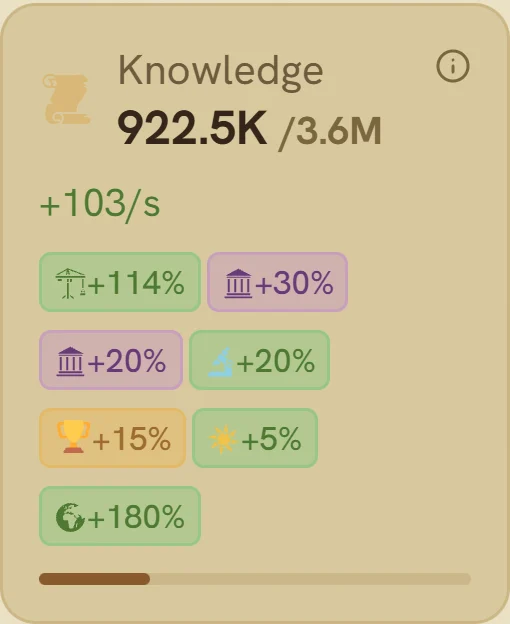
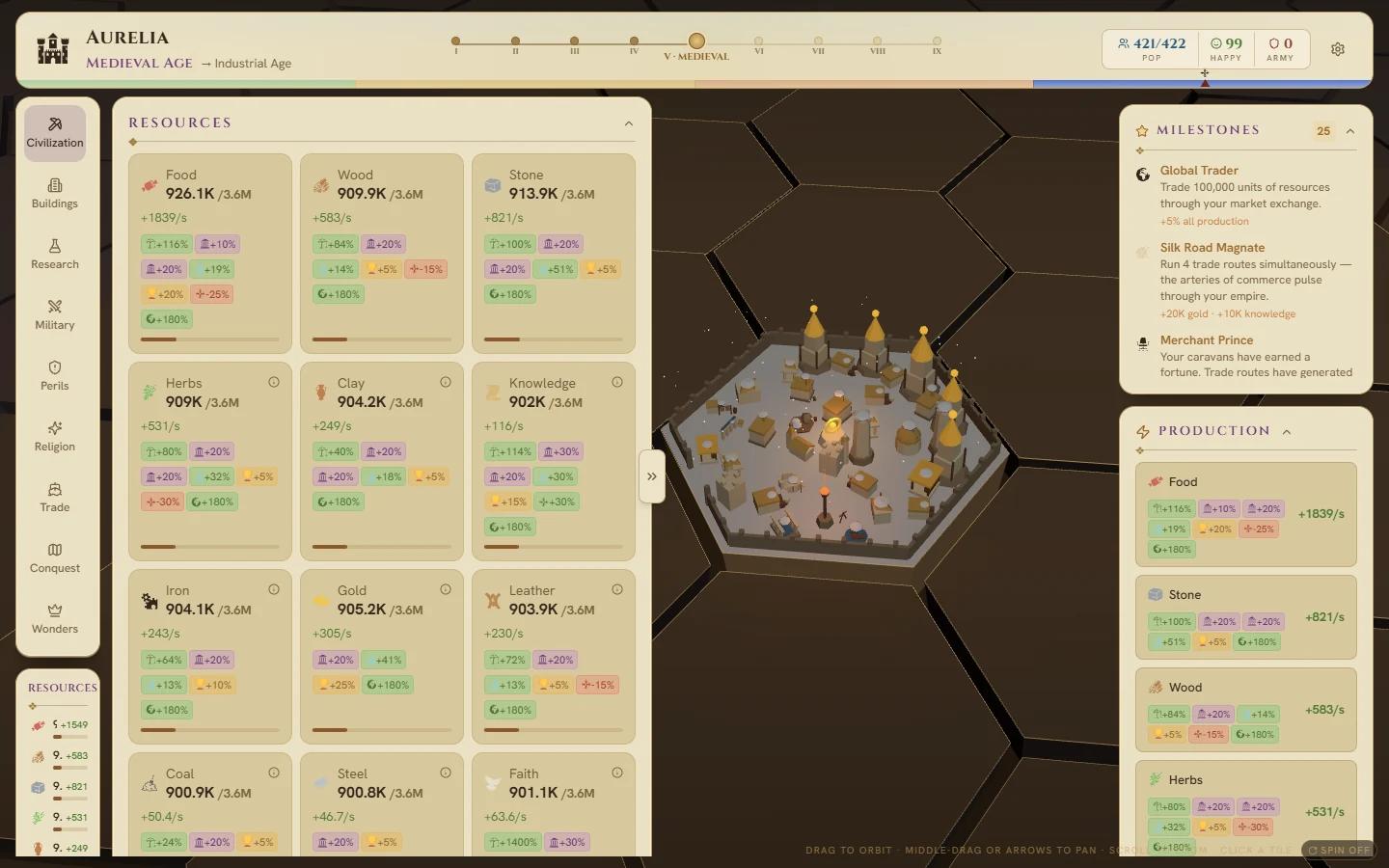
Shown at actual size, straight out of the running game. Nothing here is a mock-up and nothing is scaled up to look impressive — this is the type you'll be reading.

Seasons
Four seasons, one hour each, on a loop you can plan a whole session around. Winter is not decoration: food upkeep rises 30%, population growth drops by a third, every march slows by a third, and the smoke from your industry sits over the valley instead of clearing.
The shell
Resources and workers on the left, the world in the middle, milestones and a live production sheet on the right. Panels fold away when you don't want them.
The demo runs the opening five ages — from the first campfire to a walled classical city — on the same build these images came from. The full release follows.
Opens the Steam store page in a new tab.
Talk to us
We're fixing reported bugs and balancing around what players actually run into. Write below and it lands in our inbox — no account, no forum, no ticket number.
Prefer your own mail client? civilizationidle@gmail.com